fashionsfromhistory:

Evening Dress

Yves Saint Laurent

Spring/Summer 1980

While a long, lean body remained the ideal in the 1980s, a new, wide shoulder began to be appended to the silhouette. Ornately rendered here by Yves Saint Laurent, the shoulder provided a foundation from which fabric could be draped down to a contrastingly narrow waist. In the hands of some 1980s designers, shoulders were padded out to absurd widths. To a degree, this was a revival of 1940s fashion. Toward the end of the 1980s and into the ‘90s, historicist revivals by fashion designers have created such a multiplicity of silhouettes that finding the defining one will have to wait.

Marguerite Duras wrote in appreciation of Saint Laurent’s synthesizing imagination, “I tend to believe that the fabulous universality of Yves Saint Laurent comes from a religious disposition toward garnering the real—be it man-made—the temples of the Nile—or not man-made—the forest of Telemark, the floor of the ocean, or apple trees in bloom. Yves Saint Laurent invents a reality and adds it to the other one, the one he has not made.” In this case, Saint Laurent invents a mysterious East and adds it to the Stendhalian valor of formal military dress.

The MET

African Artist and Japanese Designer Create Stunning Kimonos By Mixing Cultures

seriesofnonsequiturs:

Gorgeous! And an example of true cultural exchange between two artists from two cultures collaborating.

Also – did I mention gorgeous??? Holy heck!

“While the designs retained the robe’s traditional shape,  the fabric used in the creations are sourced primarily from Senegal and Nigeria, according to Nigerian site Konbini.“

African Artist and Japanese Designer Create Stunning Kimonos By Mixing Cultures

thecuckoohaslanded:

simon-newman:

theonewhocheeps:

sometimesihavequestions:

thecuckoohaslanded:

cn123017:

thecuckoohaslanded:

thecuckoohaslanded:

thecuckoohaslanded:

specsthespectraldragon:

thecuckoohaslanded:

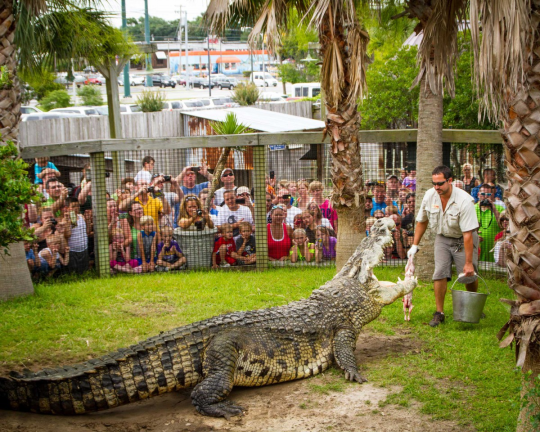
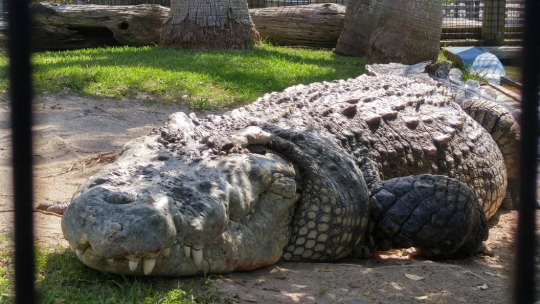
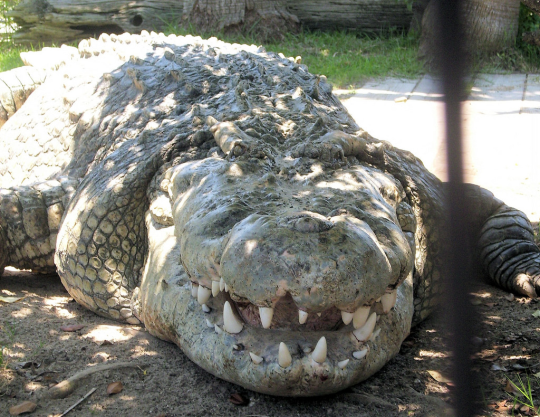
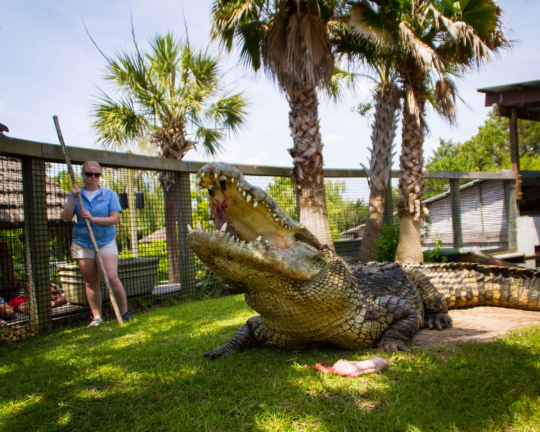
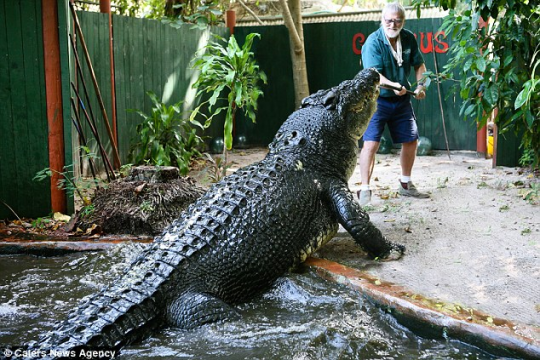
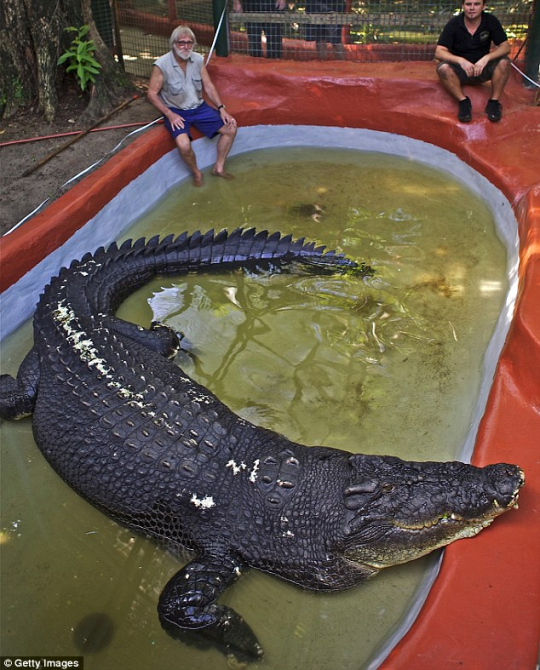
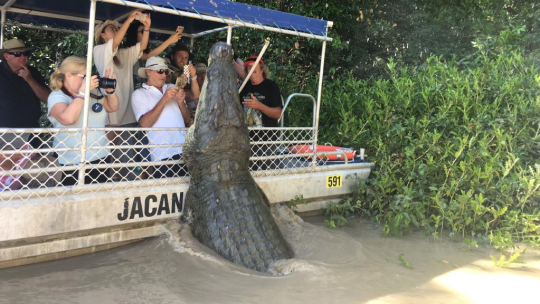
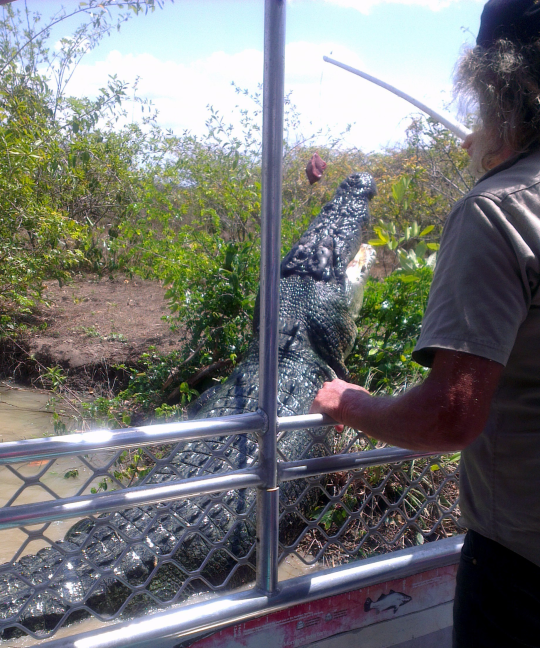
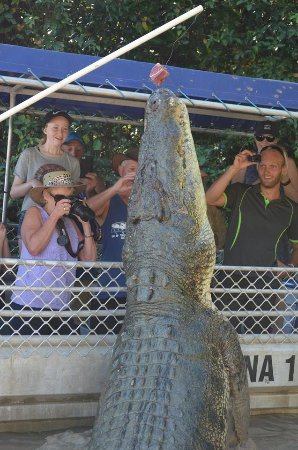
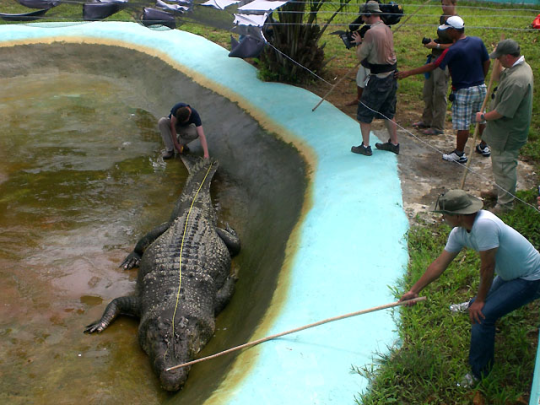
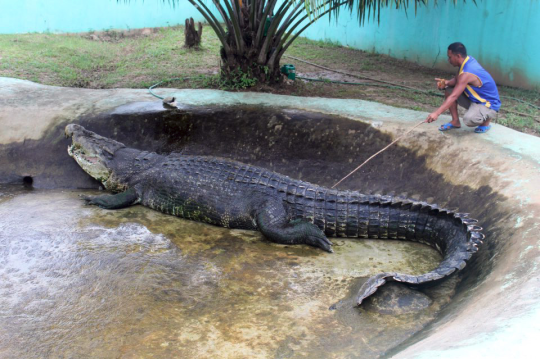
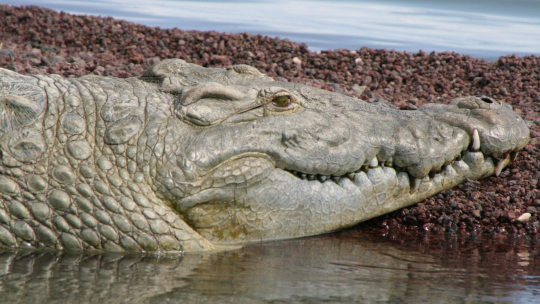
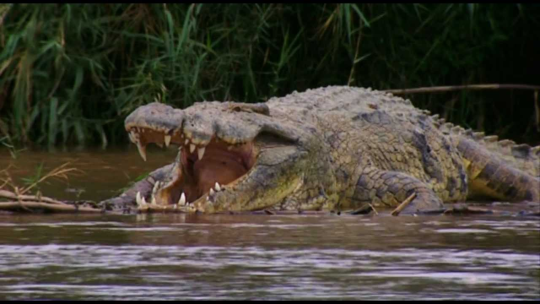
I can’t stop thinking about crocodiles for some reason so here’s some cool pictures I found of probably the second largest one in captivity, his name is Utan:

isn’t he beautiful

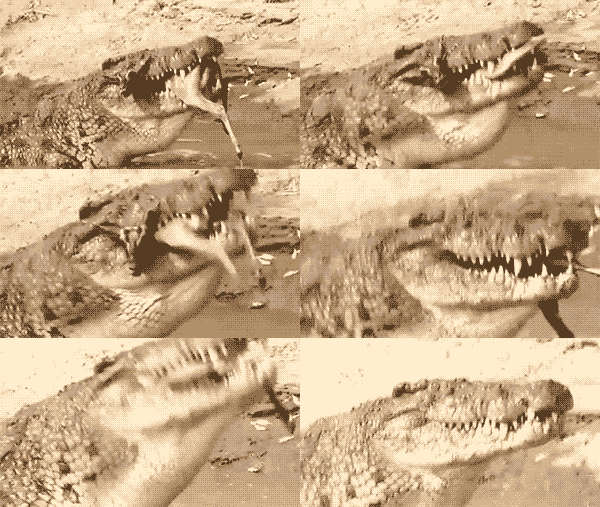
listen to the SOUND when he bites

and that’s not even a real power bite, that’s mostly just heavy bone falling on heavy bone from his jaws and the air rushing out from between them

2000 pounds of Good Boy

you get me

I honestly expected like 5 notes, what HAPPENED here

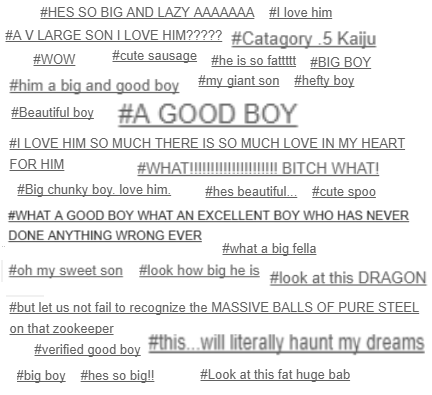
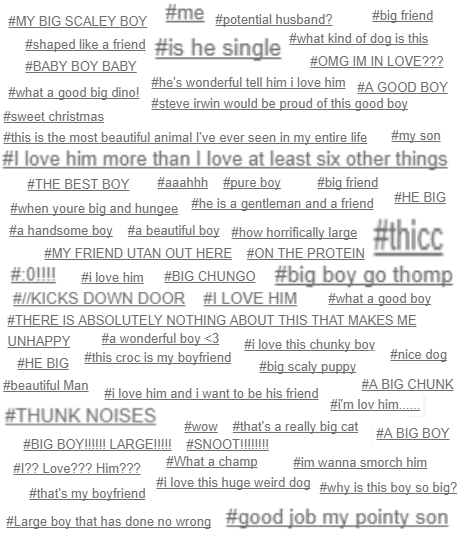
More tags on this ridiculous post:

Wait, thats the 2nd biggest crocodile? Then what does the biggest one look like?

That would be Cassius, a very old Saltwater crocodile who is estimated to be around 114 years old and lives at Marineland Melanesia in Green Island, Australia.  His official measurement is 5.48 meters, which makes him the largest in captivity currently.  Because Utan is only slightly smaller and much younger, (only in his 50s), he will likely break Cassius’ record eventually.  But for now, Cassius holds the title:

He is NOT, however, either the largest crocodile ever captured in Australia OR the largest ever in captivity.

A slightly larger crocodile has been reported (though not yet comfirmed) to have been captured at 5.58 meters.

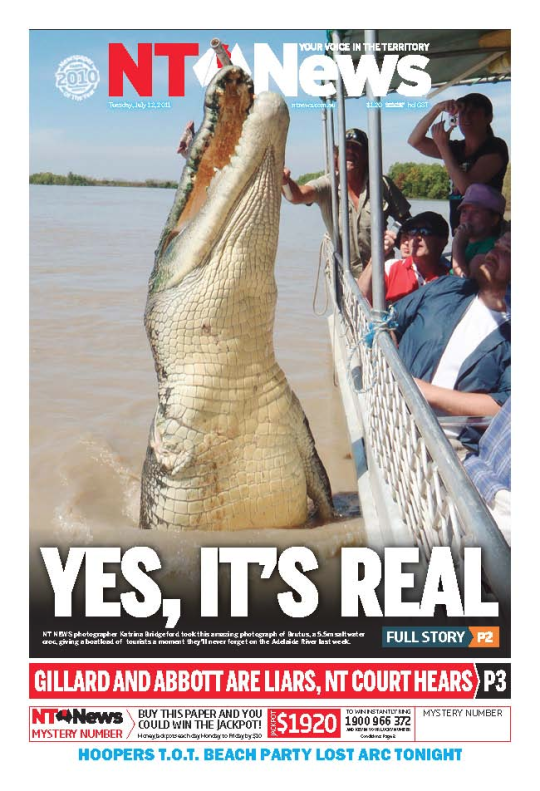
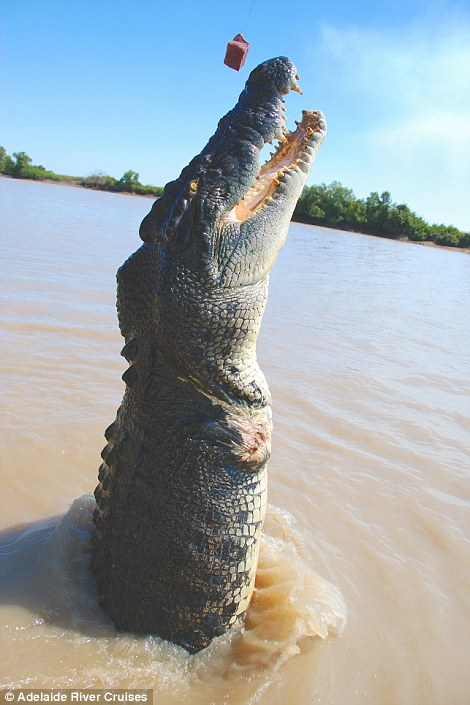
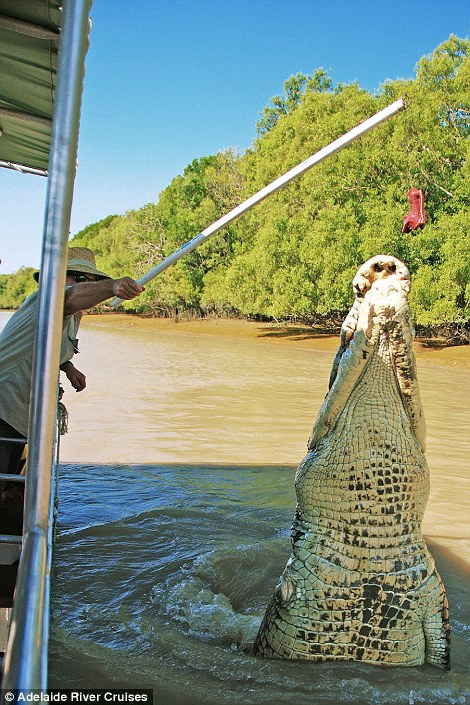
And while the famous Brutus of the Adelaide River was estimated to be just slightly larger than Cassius at 5.5m, he was driven out of his territory by a younger and even larger crocodile, who as a result has been given the name, The Dominator.  He is estimated to be just over 6m.

This is Brutus, with an appropriate caption:

It is believed that he lost that arm in a fight with a Bull Shark.  

The Bull Shark lost.

THIS is the crocodile who kicked him out.  The Dominator:

And that’s STILL not the biggest.  

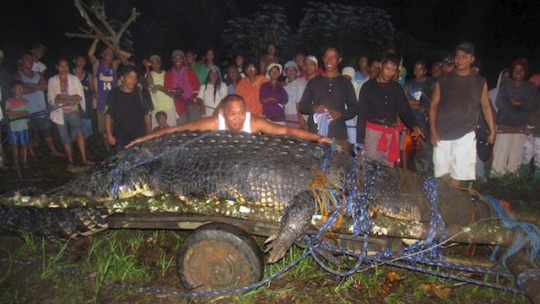
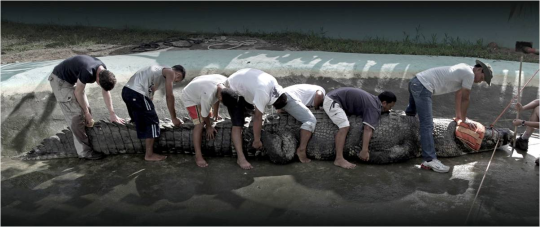
The largest living crocodile ever reliably measured was Lolong, who for the 1.5 years between his capture and his death was the largest crocodile ever held in captivity, at a whopping 6.17 meters (20 feet 3 inches) and 1075 kg (2,370 lbs).  He had been feeding on both humans and very large livestock in the Bunawan creek in Agusan del Sur in the Philippines.  It took 100 people all night to drag him to shore during his capture.

And here’s why:

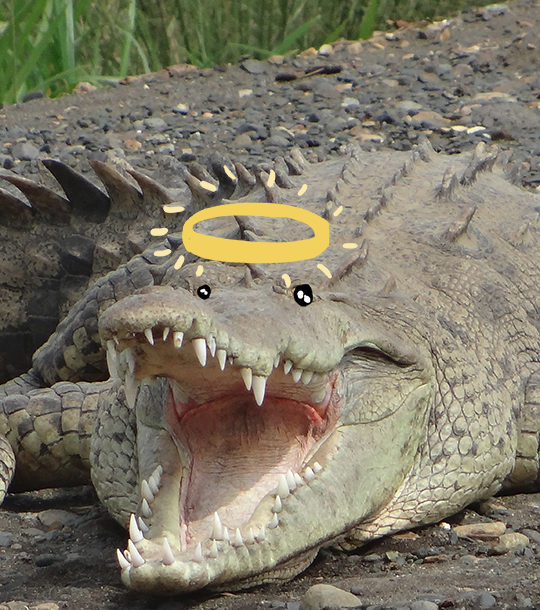
Also, to prevent credit from getting buried on a separate reblog, I have been informed that the above image of the crocodile with the cartoon eyes and halo was made by @rashkah!  (And it is wonderful and I would like to thank him for its existence, because it perfectly captures my feelings about terrifying giant primordial reptiles.)

@theonewhocheeps

Holy fuck

As far as Brutus is concerned I was led to believe that he lost that arm when relatively young.

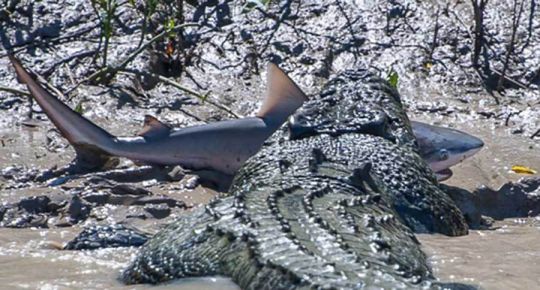
Since then Brutus developed a habit of hunting and eating Bull Sharks.

image

Here’s him with a prey.

And if you thought that you’ll be safe if you just stay out of Australia then think again!

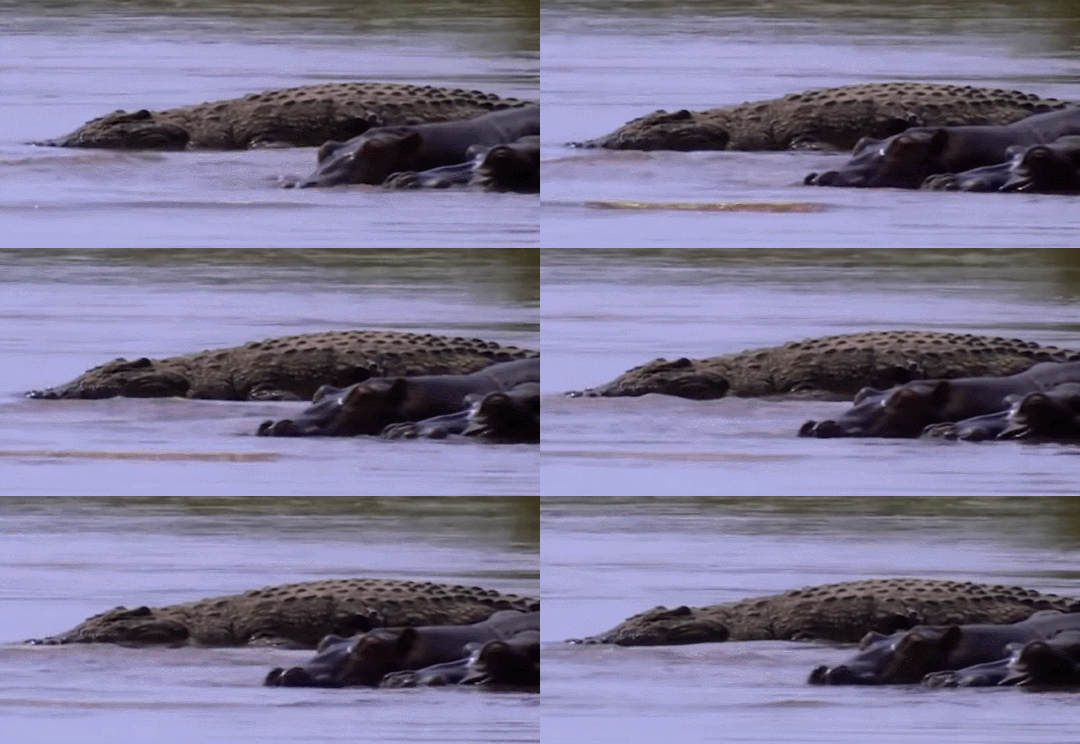
Meet Gustave the Nile Croc.

image

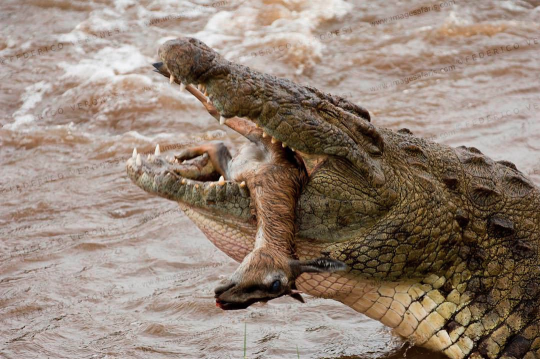
This crocodile became almost legendary for both it’s size and the habit of hunting both livestock AND humans.

So how big is Gustave?

No one is sure. Since he was NEVER captured.

His estimated size is of at least 5,5m  but some give him over 6m.

The terrifying parts are:

1) He is still growing having only about 60 years.

2) Adult crocodiles often perform a gesture of submission to him – something usually done by young crocodiles toward adults – Gustave is just THAT BIG.

3) His sheer size makes it difficult for him to catch agile prey Nile crocs tend to feed on – hence why he developed a habit of hunting either larger prey like Hippopotamus or creatures which are not good at spotting danger in the first place like livestock and humans.

And this is NOT ALL.

Gustave actually has a noticeable scars on his body – he was shot at east 3 times and stabbed with a spear or something similar at one occasion.

He lived to tell the tale – my question is:

What happened to that one dude who attacked Gustave with a spear?

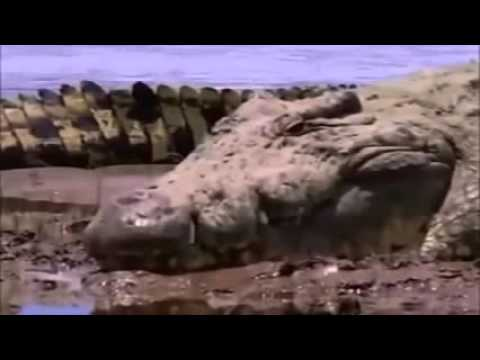
image

*Crocodile Dundee voice*  Mate, that’s not Gustave:

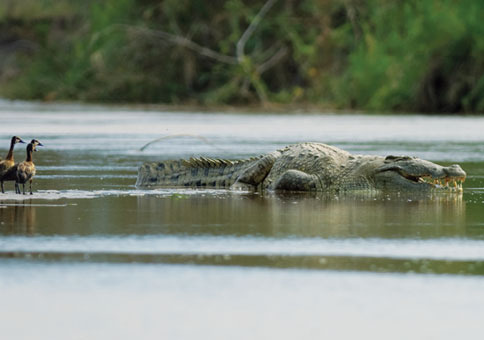
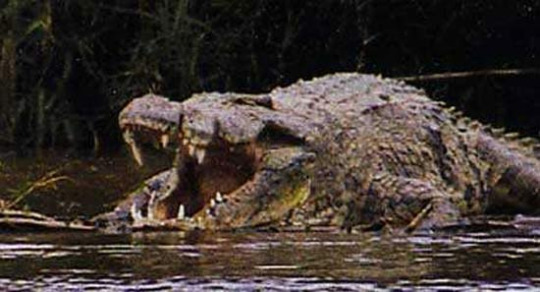
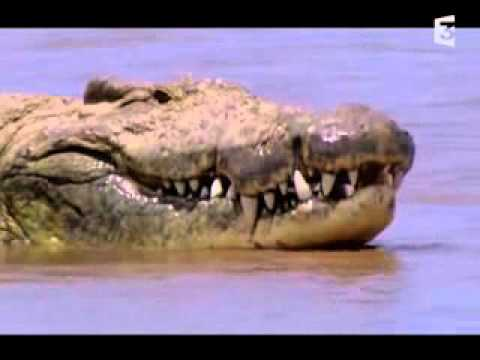
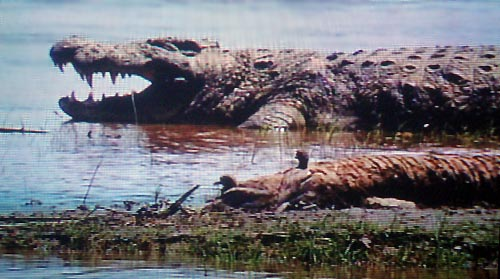
THIS is Gustave:

And he is the PERFECT CROCODILE.  He is the perfect example of what I mean when I talk about (as I do) how the morphology of extremely large crocodiles adapts to the changing physics of their bite.

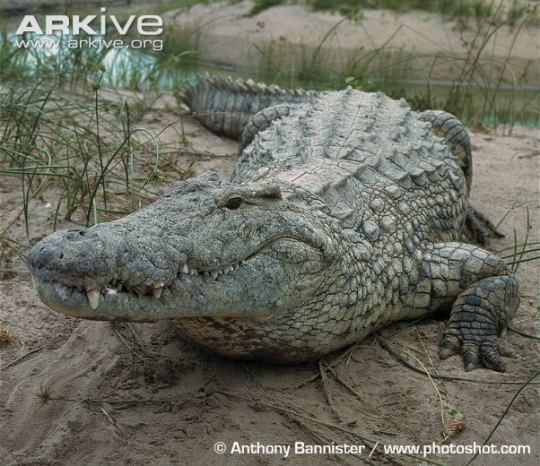
This is a typical adult Nile Crocodile:

And THIS is a god among his kind:

This is it, folks.  The Final Form.  THIS is what peak performance looks like.

Crocodiles and physics have an interesting relationship.  Crocodiles have, by a CONSIDERABLE MARGIN, the strongest bite of any animal on Earth.  EVER.  Scaled up estimates (based on Nile and Saltwater crocodiles) give the extinct Deinosuchus an estimated bite force MORE THAN DOUBLE the recently updated Tyrannosaurus bite estimates.  Living crocodiles have bite forces measured in the range of 5000 pounds per square inch, for an individual around 15-16 feet.  It is estimated that modern crocodiles in the range of 18-20 feet would have bit forces around 7-8000 psi or more.

That’s a problem.

Because a crocodile’s skull is only designed to handle so much pressure.  Go beyond that limit and the force of impact when those jaws snap shut could literally shatter their own skulls.

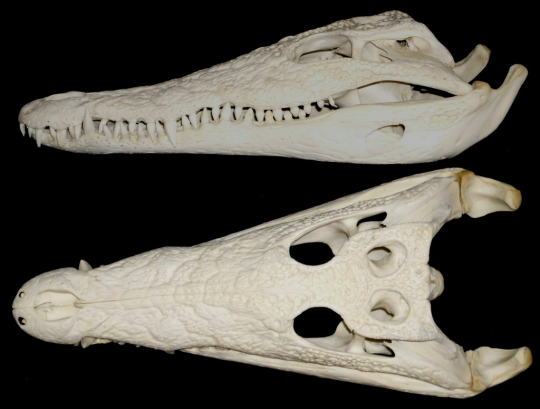
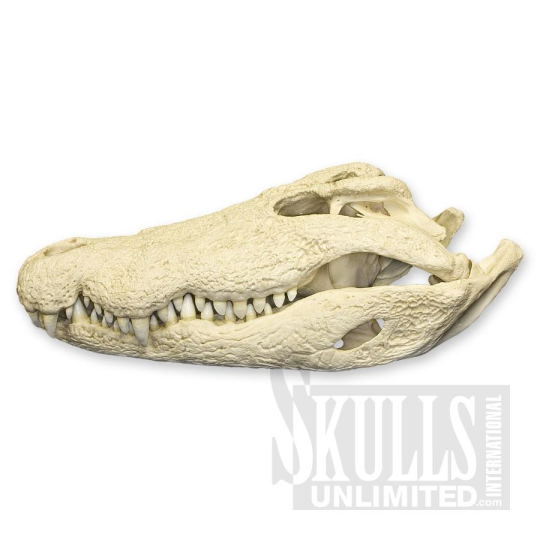
But evolution has spent hundreds of millions of years perfecting crocodiles, so PHYSICS ISN’T GOING TO STOP THEM.  What ends up happening in the skulls of these extremely large crocodiles is they will increase dramatically in mass to compensate for the increased forces.  A crocodile’s skull is almost exclusively solid bone, with only minimal space for nasal passages, a surprisingly advanced brain, and some slightly porous looking framework that helps the bone distribute the force over a larger area.  The effect is by far the most pronounced in Nile crocodiles, which most regularly feed on larger prey and need to make use of all that power.

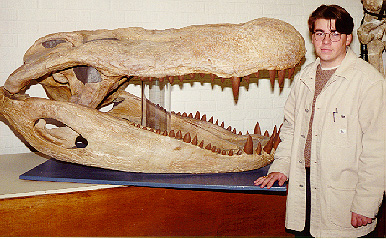
Compare, 26 inch skull:

vs 29 inch skull:

Both of those are Nile crocodile skulls (or rather, replicas thereof).

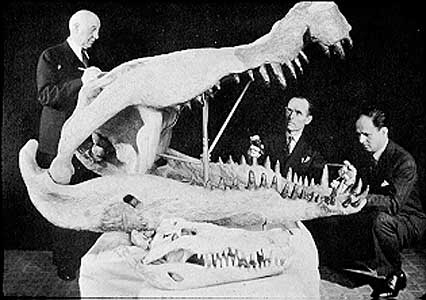
And just for fun, here are the skulls of completely different (and very extinct species), Deinosuchus:

and Purussaurus:

The bigger the crocodile (within a given species), the more massive the skull needs to be to compensate for that UNBELIEVABLE bit pressure.  This is one way to see from a distance whether you are looking at a normal sized crocodile:

and a truly extraordinary individual:

One of the things about Gustave that’s so impressive is how healthy his teeth look.  A lot of large crocodiles, in their old age, have very worn down and often missing teeth.  They do replace them many times over a lifetime, but when they get very old this slows down.  Gustave, at least in every picture taken of him, had teeth that were in very good condition.

Even crocodiles much smaller than Gustave’s reported size (probably similar in size to Dominator or Lolong) tend to have smaller or more worn teeth:

than the pinnacle of his kind:

Legit Worldbuilding Tip #3

legit-writing-tips:

or – “Crafting Religions for Fictional Worlds”

Whether you’re religious or not, there’s no denying the cultural, political, and social impact that religion has had on the world around us. 

So when crafting a brand new world, whether it’s high fantasy, science fiction, science fantasy, etc., religion can play a big part of the world that you’re building. And because of its relative importance, there are a lot of things to think about re: crafted religions. 

Religions Shape Morals and Virtues

Morals are a strange thing. People aren’t born with an innate knowledge of what to do in life, or how to act. It only makes sense, then, that people would turn to religion as a guide for how they should behave. That’s easy enough to see with the world we live in. 

The Golden Rule. Nearly everybody learns this one growing up. For Christians, it comes in the form of a Biblical quote – “Do unto others as you would have them do unto you.” But the concept isn’t unique to Christianity. Nearly every religion has this same rule, in some form or another. 

But when you get further into the details of differing religions, you see that each has its own set of morals and what it feels is “right.” This can range from Evangelicals who feel that same-sex love is a sin because of an archaic passage from the old testament to vegetarianism as a way to avoid hurting other living creatures, commonly found among Hindus. 

So What Does This Mean?

Well, this means that when you’re crafting a religion, one of the things to think about is what morals you want in your world. 

Don’t want a world with a bunch of homophobic assholes? I’ve got good news for you! A same-sex couple amongst your pantheon of Gods and you can have a world where people don’t just accept same-sex love, but celebrate it!

But that’s not the only thing to think about. Different taboos are often religion-centric as well. 

These taboos can have minor consequences on your world-building in some ways. For example, maybe you just want to make things more interesting by adding details such as characters who avoid certain kinds of metals or stones because they’re strictly forbidden in their religious texts. 

These taboos can also have major consequences on your story. For example, even in the modern day and age there are a lot of prejudices against albinism in some African countries. You can imagine the consequences for such a character.

Religions Shape Cultural Practices and Thoughts

In the West, pretty much everybody celebrates the holidays, even if they aren’t Christian. They may adapt their practices depending on their beliefs, but regardless, if you live in a country like America you’ll experience a lot of religious influence around the holiday season. Christmas, a day that celebrates the birth of a religious figure, has a tremendous cultural impact even on those that aren’t Christian. 

When crafting a religion, it only makes sense to think about the cultural impact said religion will have. Holidays, prayer, rituals, religious pilgrimages, the way that people keep track of time (as in our AD system), taboos (as already mentioned), fasting, celibacy, religious bathing/cleansing… 

These are just a few practices that exist within different religions. Many are so ingrained in our culture that people don’t even think of them as “religious” any more. 

For example, the practice of abstaining from sex before marriage. This single religious belief has created a culture that is very prohibitive regarding sexuality. A lot of people still think that fewer sex partners = a better person, even those who aren’t adherents of any religious philosophy. It’s just something that’s ingrained in our culture. 

All this to say – the best starting point for creating a religion in a fictional world is knowing what kind of world you want to write. 

With all that out of the way, let’s get on to the actual creation process. There are a few things to think about, but I want to start with something I feel is very important. 

There are a lot of religions out there. I suggest you research them and learn about them.

But please don’t just take an existing religion, especially one from another culture, slap a new name on it, give it an air of mysticism, and then be done with it. It’s disrespectful to those who actually practice these religions.

*Ahem* Okay, I’ve said my piece and now I’ll move on. 

Remember – Multiple Religions Can and Usually Do Exist in a Culture

This is the first and most important thing I want to point out. Most of the stories I’ve seen where creators do religion right is when they remember that not everybody practices the same religion. 

George R. R. Martin does this incredibly well with the different religions in ASOIAF. They are all different, they are all unique, they are very much shaped by the part of the world that those characters live in. 

Also remember that the same religion can have many different interpretations, leading to different branches and sects. They can be quite different and they may not get along that well. This is another thing that is often forgotten. 

Different Types of Religions

Throughout history there have been many different types of religions. Some have a single god. Some have an entire pantheon. Some see gods as people. Some see gods as animals. Some gods are both people and animals, depending on the story that’s being told. Some religions see gods as having no form. Some religions teach that god is the universe. Some say that there are no gods, but there is power in everything.

Let’s Talk Prophets and Stuff

Another thing to remember is that religions are often centered on a prophet, or a person’s teachings. While a god or pantheon of gods may be central to that religion, the prophet/guru/etc. is also very important. Jesus, Muhammed, the Buddha… just a few real world examples. 

This is where I take the time to point out something important. Your religion doesn’t have to have a male prophet/teacher. A prophet can be a woman. Or nonbinary. There can be six prophets who worked together, all of different gender identities. In fact, this can be a really good way to get rid of gross stuff like sexism in your world’s culture, or just plain avoid stereotypical high fantasy with Manly Men and Damsels in Distress.

Leave Some Stuff Unexplained

Another thing I want to point out is that religions don’t usually have explanations for everything. I mean, the whole point of religion is faith most of the time. 

I was talking with @more-legit-gr8er-writing-tips earlier about this. Because I still get mad about the midichlorian thing in Star Wars. The Force was an awesome (if a little underdeveloped) religion. It was focused on the power that exists in all things rather than the idea of a god. Certain people could access the Force. All was good. Then they made the Force the result of little critters that live inside people. 

No. No no no. Okay, I’ll stop. Just suffice it to say, whatever genre you’re writing in, don’t feel the need to explain everything. Even if magic exists, even if there’s science, just embrace the mystery and the wonder of the religion you’ve created.

Religious Institutions

I’ll keep this one short. But just remember that where there’s religion, there’s inevitably going to be some sort of religious institution. It may be that in your world every town has its own religious leader and group of scholars. Or you could have a vast system of temples. Or you could have the fantasy equivalent of the Catholic Church. 

(Remember also – the bigger a religious institution is, and the more influence it has on the people, the more likely it is going to be a power in its own right in your world – a.k.a. the Catholic Church basically being a governing power in our own history.)

Religion in Science Fiction

Apart from some science fantasy, I’m hard pressed to find many science fiction stories that include religion. I think there’s a general assumption that people will move away from religion, especially as we learn more about the world we live in.

But… people are people. And I’m 100% sure that there will always be some people who believe in something. Your dystopian government may not like it, but somebody somewhere will discover the last unburned copy of the Torah and a brand new religion with elements of Judaism will spring up around it. 

And that starship flying through space in the year 3277? Probably going to have Buddhists, Hindus, Christians, Muslims, and who knows what else on board. Though they may not practice religion the same way we do now. And who the crap knows what the aliens are going to believe in.

Common Themes in Religion

One of the final things I have to say is that, for as many differences there are in religions, there are a lot of commonalities. Things like prophets, and trickster gods, and miraculous births (such as children being found in rivers or born to virgins). I suggest you do some research on the commonalities in religions and use them if you need a bit of inspiration for crafting your own. 

Anyway, I’ve rambled long enough. I just want you to consider some of these things. This is just one way to build a little more complexity into a world you’ve created, and it can do a lot for everything from plot to making the reader really believe that your world exists. So have at it! Enjoy playing god(s). 

Legit Worldbuilding Tip #2

legit-writing-tips:

or – “Why Economics is Important”

So, let’s talk about economics.

I can hear you groaning back there. Hold on and hear me out. 

When you’re creating a fantasy world or a sci-fi world, many things define cultures. One of the most important for a lot of writers is religion, with politics being secondary in a lot of cases. 

But how often, when trying to create a unique world for your characters, do you stop and think about how money works for them? Or if they use money at all?

Let me pause right here and give you the dictionary definition of economics. That might help you understand exactly what I’m talking about – 

ec·o·nom·icsˌ

ekəˈnämiks,ˌēkəˈnämiks/

noun

  1. 1.the branch of knowledge concerned with the production, consumption, and transfer of wealth.

It’s not just a “money” thing. Economics is all about how things move in a society – where things come from, who produces those things, and – most importantly for worldbuilding – how the people in a community are affected by that system. 

A lot of writers will just look at our world and transfer that model directly into the world they’re writing about. There are rich people who have money, and poor people who don’t. In science fiction novels, people might exchange credits for the things they need. In fantasy, characters hand over gold coins without the writer giving it a second thought. 

So What’s the Issue?

Well, the issue is this – different economic systems work (arguably) for different worlds. You can see that in our current society. Different countries function better with different economic landscapes. That’s been true through history, too, and economics have changed with the times. 

But… I Don’t Know Anything About Economics

Nobody is asking you to write a giant manifesto about the next great economical system. Nor do you need to describe the details of your world’s economics in your story. Your characters likely don’t know everything about how their economics work, and your reader probably won’t care. 

But. But. Little details here and there can help enhance a world and show how it’s different from ours. Little economic details can help you better understand how your world actually functions. They can better explain things about your characters and the lives they’ve lead up to that point. 

Case in point. In the Dragon Age series of games, there is a magical substance known as lyrium, which is important to both mages and soldiers known as Templars (who use the substance to increase their power).
Because lyrium affects most individuals, but not dwarves in this world, dwarves have developed an entire society centered on mining and distributing lyrium to the other races. Dwarves are merchants primarily. There is also a large dwarven crime syndicate that smuggles lyrium illegally. In essence, the importance of lyrium has led to a lyrium-based economics system for the dwarves in this world. 
So What Things Should I Be Thinking About?

The biggest thing to consider is what “wealth” means in the world you’ve created. First and foremost, where does most wealth come from?

Let’s look for a moment at our history. In one example,lLandowners with a lot of good, workable property became rich usually because of taxes. They took money from other (poorer) people in exchange for a place to live, as well as protection. Those landowners became the “lords” and “kings” of the places and peoples they swore their protection to in exchange for money, goods, and services. 

This is the basis of most fantasy fiction. There are also many ways this system could be exploited in a fantasy world. 

Here’s a hypothetical. In a high fantasy world, only a certain type of person is able to fight and kill demons that appeared a few centuries earlier. Most people would be dead if left to their own devices. 

But, these Demon Fighters realized they could exploit their abilities. They offered to protect the common folk in exchange for what the people could provide them. So, in time, the Demon Fighters became the ruling class.

But even among the Demon Fighters there is a class system. Not every Demon Fighter has the same abilities. Some individuals are more suited to combat, being able to take down demons by force. Others have the ability to control demons. In time, the combat-able Demon Fighters become soldiers and those with the ability to control demons become Nobles, most of whom have demon servants and bodyguards.

Let’s Talk About Surplus and Scarcity

In most societies, economics are centered on two principles. 

The first is surplus. Having a surplus means having more than is needed of something. The other is scarcity. You can guess what this is. The more scarce something is (i.e. the less of something there is) the more valuable it becomes.

The more food that is available, the less difficult it becomes to acquire food. It can be freely traded, whether for other items/services of equal value or for money (or whatever symbolic exchange product a society uses, like “credits” in a sci-fi world). If there’s not a lot of food to go around, it becomes more difficult to acquire food. 

The person who has a lot of a needed thing holds power over those who don’t have that thing. In the Dragon Age example, even though dwarves aren’t human they aren’t treated as poorly as elves, another race that exists within that world. People rely on dwarves for lyrium, which gives them power, which means that even if they aren’t human they are important enough to humans to be treated more “equally” than elves.

What if Nothing is Scarce in My World?

For a while now, people have talked about the possibility of a post-scarcity economy. I’ll just leave this here – https://en.wikipedia.org/wiki/Post-scarcity_economy

Post-scarcity economies are often found in science fiction that idealizes the future. Often these societies have a lack of a power structure. If anybody can go out and get what they want or need at any given time, then it’s hard for any one group to hold sway over the rest. 

Sometimes, companies today will create false scarcity by destroying goods and forcing the prices of those goods to be higher than it should be. This has happened in the dairy industry, with tons of milk being disposed of because dairy farmers want to protect their livelihood. 

I will say that I am NOT an economics expert, by any means. Nor do you have to be to think about it when writing fiction. 

Just be aware of the power structures that exist because of economics, and how this will likely play a role in the world you’ve built. Think of ways to play around with the power structures. Think of how your idea of space travel or demons or whatever will affect your world’s power structures.

All this can lead to a lot of interesting dynamics in your world that can help set it apart from the rest.

frauleinpflaume:

For artists who have problems with perspective (furniture etc.) in indoor scenes like me – there’s an online programm called roomsketcher where you can design a house/roon and snap pictures of it using different perspectives.

It’s got an almost endless range of furniture, doors, windows, stairs etc and is easy to use. In addition to that, you don’t have to install anything and if you create an account (which is free) you can save and return to your houses.

Examples (all done by me):

Here’s an example for how you can use it

stir-by-still:

TAROT CHEAT SHEET #1

MAJOR ARCANA

0. THE FOOL | blank slate, beginning, innocence
®* | reckless, negligence, unaware of consequences
1. THE MAGICIAN | willpower, manifestation of desires
® | trickery, illusions, lies, out of touch w/ truth
2. THE HIGH PRIESTESS | intuition, inner voice
® | repressed/unheard inner voice
3. THE EMPRESS | mother figure, nurture, earth/nature
® | smothering, dependence, needing to let go
4. THE EMPEROR | authority, structure, control, father figure
® | tyranny, too much control
5. THE HIEROPHANT | tradition, conformity, morality
® | rebellion, subversiveness, divergence
6. THE LOVERS | union, duality, choice, harmony
® | disharmony, loss of balance
7. THE CHARIOT | self-control & willpower leading to victory
® | loss of control, lack of direction
8. STRENGTH | bravery, inner understanding that radiates power
® | self-doubt, insecurity, weakness
9. THE HERMIT | solitude, contemplation, seeking inner truth
® | loneliness, isolation, disconnect w/ fellow humans
10. WHEEL OF FORTUNE | change, cycles, inevitability
® | bad luck, helplessness, series of bad events
11. JUSTICE | cause & effect, karmic retribution
® | unpunished misbehavior, unfair, turning a blind eye
12. THE HANGED MAN | willing sacrifice, release of control
® | stalling, needless sacrifice, waiting to no avail
13. DEATH | end, cyclical closure, metamorphosis
® | fear of change, stagnation, limbo, holding on
14. TEMPERANCE | moderation, balance, middle path
® | extremes, excess, lack of balance
15. THE DEVIL | materialism, destructive patterns, excess
® | freedom, release, restoring control
16. THE TOWER | sudden disaster, upheaval, collapse
® | delaying inevitable disaster, avoiding suffering that could lead to growth
17. THE STAR | hope, faith, guidance
® | faithlessness, lack of guidance, negative thoughts
18. THE MOON | unconscious, intuition, illusions, dreams
® | confusion, misinterpretation
19. THE SUN | success, clarity, positivity, conscious
® | negativity, depression, sadness, pessimism
20. JUDGEMENT | reckoning, honest evaluation of oneself
® | lack of self-awareness, self-loathing
21. THE WORLD | completion, wholeness, fulfillment
® | incompletion, no closure, nearing end of journey but something is missing

*® = reverse card meaning*® = reverse card meaning

Tarot Cheat Sheet #1 – Major Arcana

Tarot Cheat Sheet #2 – Wands

Tarot Cheat Sheet #3 – Cups

Tarot Cheat Sheet #4 – Swords

Tarot Cheat Sheet #5 – Pentacles