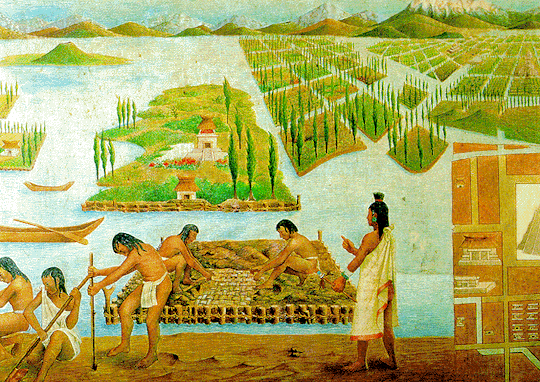
How on earth would you feed a city of over 200,000 people when the land around you was a swampy lake? Seems like an impossible task, but the Aztec managed it by creating floating gardens known as chinampas, then they farmed them intensively.
These ingenious creations were built up from the lake bed by piling layers of mud, decaying vegetation and reeds. This was a great way of recycling waste from the capital city Tenochtitlan. Each garden was framed and held together by wooden poles bound by reeds and then anchored to the lake floor with finely pruned willow trees. The Aztecs also dredged mud from the base of the canals which both kept the waterways clear and rejuvenate the nutrient levels in the gardens.
A variety of crops were grown, most commonly maize or corn, beans, chillies, squash, tomatoes, edible greens such as quelite and amaranth. Colourful flowers were also grown, essential produce for religious festivals and ceremonies. Each plot was systematically planned, the effective use of seedbeds allowed continuous planting and harvesting of crops.
Between each garden was a canal which enabled canoe transport. Fish and birds populated the water and were an additional source of food. [x]
This is literally so cool. Not only does it contribute to spacial efficiency, but the canals would easily keep pests, weeds, and possibly even diseases out of the respective plots. Companion planting and bio-intensive planting would be so much easier. Water-wise systems would be inherently present. Plus it looks so super neat aesthetically. I am just all about this.
Indigenous civilizations invented sustainable development way before there was a term for it.
Designed by Vietnamese H&P Architects, these bamboo houses are designed to be affordable for rural Vietnamese families, being made from locally sourced and recycled materials. The base of these bamboo houses is made from repurposed oil drums, allowing it to float during floods, with a steel backbone to protect the building’s structure and keep them from being washed away.
The bamboo and thatching which make the building itself are locally abundant and renewable, with the style being inspired by traditional building techniques. For sustainability, especially during crises, the houses also incorporate a rainwater harvesting system and garden walls for fresh vegetables.
To survive the tropical storm winds and torrential rain which come with the floods, the canopies and decking areas can be folded up to enclose the entire house to protect those inside, plants and all.
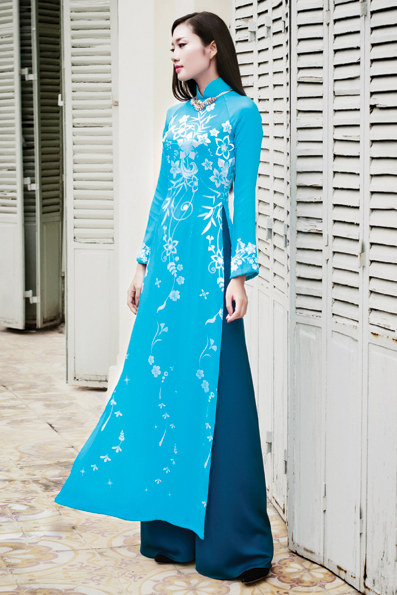
“A new trend has emerged in the [Western] fashion world. Or so they say. Fashion bloggers, stylists, and prominent members of the fashion industry are all talking about the ‘dress over pants’ trend, which Pakistanis have been sporting for as long as we can remember.”
I saw this Kendall Jenner tweet awhile ago on the internet and I remember thinking, “Hey that’s what us Pakistani and other South Asian women wear all the time; we’ve been wearing these for years. What’s so special about this?” and then I remembered that if you’re white, everything suddenly becomes sooooo chic and stylish!!! And when the rest of us wear it, we’re insulted or stereotyped, get nasty looks, racist remarks etc etc. I mean, I’ve seen a lot of other celebs in the West wearing clothes like this too and of course they all get praised by the media and fashion bloggers for starting some new and creative trends, but the rest of us get crap for wearing our original cultural clothes.
This dress is pretty common in Pakistan, and other South Asian countries. Pakistani women rock this look pretty well:
Why do they take our fashions and create some bland and boring version of them?
Here’s another article with historical and modern examples of South Asian (Pakistani and Indian) fashion of which these gorees stole, i mean….were “inspired” by lmao
A reimagining of city design by Belgian architect Luc Schuiten. His concept is to blend the natural with the artificial by using living architecture to construct urban centres. To do this Schuiten envisions new ways to plant trees and shape their growth, pruning and grafting them into buildings and residences, using textiles and bioluminescence. Honestly, it’s one of the most delightfully solarpunk city concepts out there!
“The City of Habitarbres [habitable trees] develops in a remodeled forest environment tailored to the needs of a new lifestyle. The people are no longer consumers, but the actors of a new ecosystem that enables the management and the development of every term and ensures a long-term evolution of the city.” – Luc Schuiten





 Chimaeric Archive