For artists who have problems with perspective (furniture etc.) in indoor scenes like me – there’s an online programm called roomsketcher where you can design a house/roon and snap pictures of it using different perspectives.
It’s got an almost endless range of furniture, doors, windows, stairs etc and is easy to use. In addition to that, you don’t have to install anything and if you create an account (which is free) you can save and return to your houses.
How I break down anatomy and make it mechanical while still looking organic/streamline in shape. These guidelines can be stretched, squished, pulled, and widened however you see fit. They will work for any shape, from big and squishy to thin and spindly.
You can ref from this where needed, I encourage you trace this image in your private/personal studies, just please refrain from posting the image if you trace from this!
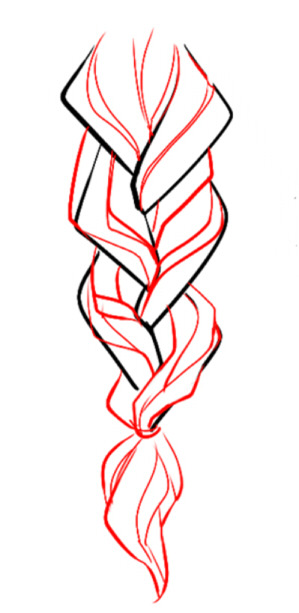
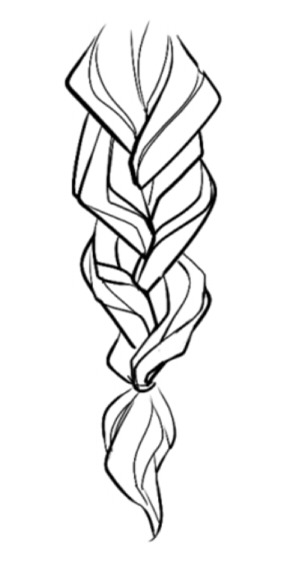
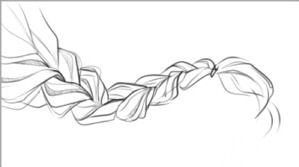
There may be easier ways of building braids than what I do, but this is just my process for drawing them, so take it with a grain of salt.
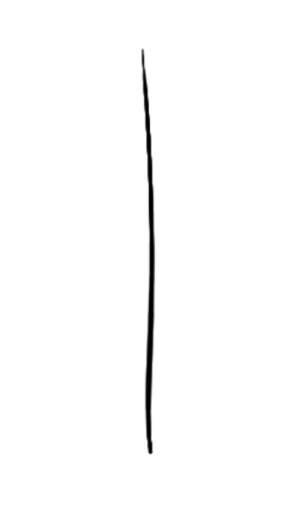
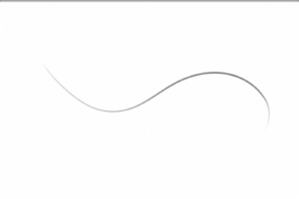
I’ll start with a line for whatever direction I want the braid to go in, if I don’t do a line and I have any kind of motion to the hair, boy do I mess it up lol
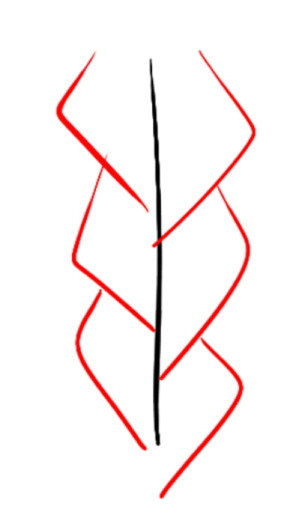
Next I’ll do wide half triangles, the line being my center, the right side or the left side always dropped lower than the other. If both sides meet in the center at the same level it’s not going to look very braid-like or have the illusion of being tangled with itself.
Afterwards you can remove the middle line if you want to take it further and connect each one with an alternating pattern like this one, giving it more of a braided look in the center.
Once the center is solid, you can add all the details you want in any style you like, curving inwards towards the center. I tend to like the more stained glass-ish appearance for hair so I’ll do very choppy, squared off lines to detail.
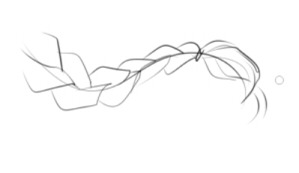
This works for whatever position you want to put the braid into using the wide triangles to build it up. It works for tightly woven or loose and messy braids depending on how wide/long you make the original half triangles.
All the basics you need to begin learning to draw and think visually like an artist from a starter level!
Note: Feel free to leave suggestions as there may still be topics left uncovered, since art is such a wide subject the list could go on for miles so I’ve chosen what I see as the most basic fundamentals
Here’s an exercise! I cannot draw cars well. I don’t like drawing cars.
The first sketch was from memory without looking at any photos of a car. The second was traced from a photo of a car. The third, without looking at any photos or previous sketches. I still can’t draw cars very well but a bit more about what they look like are embedded in my memory. :>
Tracing is a wonderful way to practice. This works for more than just machines, if you trace something then it helps you learn how it FEELS to draw something accurately, which gives you the freedom to experiment, exaggerate, and stylize your art without sacrificing structure and recognizeability.
I get a lot of compliments on the way I draw muscular people. If I had not gone through a phase of tracing models then I would not have learned how it FEELS to draw proportional muscles. It greatly improved my art in the long term, and now when I use reference photos I find that it’s easier for me to make sense of what I’m looking at.
HELLO! HMMM I guess a way to go about it could be to think about having an action and reaction?
THese are some things i like to keep in mind when drawing characters together!! I personally rly like little details like placing hands in a specific spot/ fingers in hair/ pulling on clothes etc HAHA ALSO I like doing quick doodles from shows/films to see how characters interact with each other, so maybe u could try doing that!! I HOPE THIS HELPS YOU OUT A LITTLE!







 Chimaeric Archive